





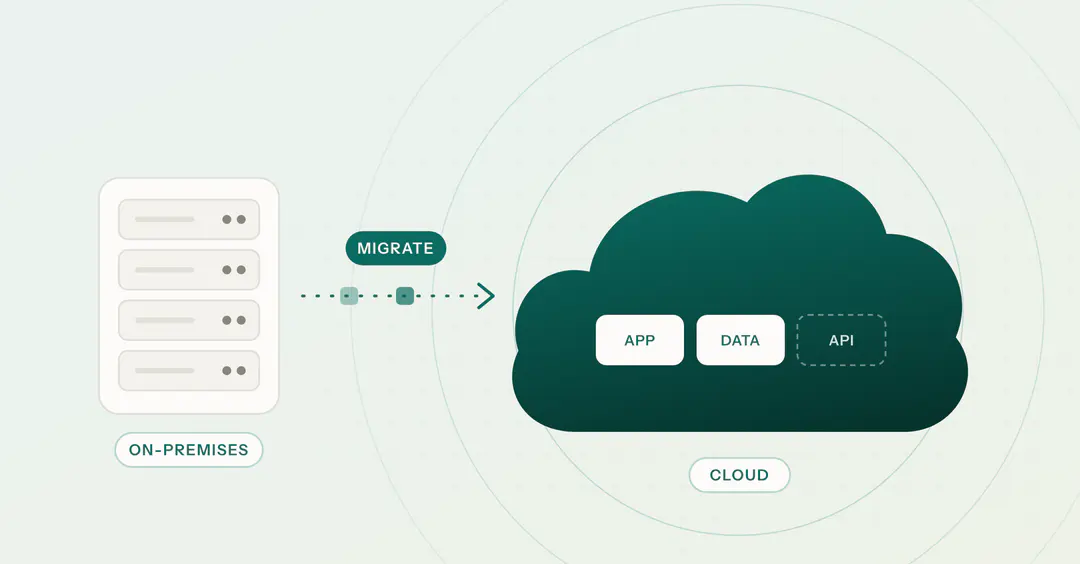
The economics of moving to cloud have shifted, and so has what buyers need from cloud migration companies. Gartner forecasts worldwide infrastructure as a service spending at $367 billion in 2027, growing 25.7%, with data center systems up 55.5% as AI infrastructure buildout accelerates. Estates being moved today carry heavier compute, larger storage footprints, and steeper egress than anything migrated five years ago. The architecture set during a migration now decides your run rate for years, not just how the cutover weekend goes.
Picking a partner for that is a harder evaluation than it first appears. Cloud logos are inexpensive to put on a services page, and a firm can carry three of them without ever having been accountable for a monthly bill or an incident at peak load. Our own team designs and operates cloud infrastructure for clients in India and the US, and that is the lens we brought to reviewing everyone else.
We reviewed more than 40 cloud migration companies against nine criteria, and these 14 made the list.
Quick answer: Three groups, depending on what your migration actually is. Kyndryl and Deloitte are the picks when the job is a full data center exit or a transformation program with a board behind it. Procedure, SADA, and Ensono suit teams that care about who is still on the account in year two and what the platform costs to run. SourceFuse suits budget-constrained AWS programs, and Anblicks suits data platform moves where the warehouse is the main body of work. Scoring for all fourteen is below.
Procedure is one of the companies evaluated in this list. We applied the same criteria and data sources to every company, including ourselves, and the methodology is set out below.
How We Evaluated These Cloud Migration Companies
Two numbers get quoted constantly in this category: partner tier and headcount. We report both, because they carry information. Neither survives contact with the question that matters, which is what an eighteen-month migration with a given firm is actually like. Partner tiers in particular are priced in committed customer spend and certified headcount, so a disciplined 300-person team can sit at Advanced Tier for years while a 10,000-person integrator with cloud scattered across a dozen practices holds Premier.
Nine criteria, weighted toward what decides whether a migration was worth doing:
Migration and modernization depth (25%): Migration-labelled capability that can be checked, not a cloud badge on a homepage. Does the firm publish its assessment method, name its toolchain, and have a view on which workloads should not move at all? Everything else is secondary if the answer to that is thin, which is why it carries the most weight.
Multi-cloud coverage (15%): Credentialed work across AWS, Azure, and Google Cloud rather than one of them. A single-cloud specialist is often the correct choice, but only once the target is settled, because a firm whose entire business is one platform cannot tell you that platform is wrong for you.
Kubernetes and container capability (10%): Containers are where most migrations end up, and where most of the post-migration bill gets decided. We looked for evidence of production platform work rather than a Kubernetes bullet on a capability slide.
Client retention rate (10%): Does anyone stay past the first cutover? Published retention or visible multi-year engagements say more about delivery than a testimonial does, and it matters more here than in most categories because somebody has to operate the result.
Employee satisfaction (10%): Sourced from third-party employee reviews. A firm shedding a third of its people each year will put three different leads on your account across a two-year program, and each handover is paid for in risk.
Clutch rating (10%): The standard client review platform, used here as a floor rather than a ranking. Six firms on this list carry no rating at all, which is useful to know before you filter a shortlist on it.
Onboarding speed (10%): How long from signature to something running in your environment. Anyone working against a lease expiry or a renewal date cares about this, and almost nobody puts a number on it.
Team continuity (5%): Whether the firm will commit to named engineers staying, or quietly rotates people each quarter. On a migration, losing the person who mapped your dependencies is a different order of problem than losing a feature developer.
Workplace certification (5%): Independent culture validation such as Great Place to Work, TSOW, or B Corp. It decides nothing on its own, but it is one of the few external checks on whether the delivery team will still be intact at the end.
Cloud Migration Service Providers Compared at a Glance
| Company | Best for | Migration depth | Multi-cloud | Kubernetes | Retention | Glassdoor | Clutch | Onboarding | Team continuity | Workplace certification |
|---|---|---|---|---|---|---|---|---|---|---|
| Kyndryl | Enterprise data center exit | Deep | AWS, Azure, GCP | Limited | N/A | 3.6 | N/A | N/A | Varies | N/A |
| Deloitte | Board-level transformation | Deep | AWS (verified) | Limited | N/A | 3.8 | N/A | N/A | Varies | N/A |
| Procedure | Cloud that stays affordable to run | Strong | AWS, GCP, Azure | Yes | 98% | 4.9 | 4.8 | 5 days | Embedded teams | TSOW |
| Cloud4C | SAP and regulated workloads | Deep | AWS, Azure, GCP, Oracle | Limited | N/A | 3.6 | N/A | N/A | Dedicated teams | N/A |
| SADA | Google Cloud migrations | Strong | GCP | Selective | N/A | 4.0 | 4.9 | N/A | Dedicated teams | N/A |
| Adastra | Data platform migration | Strong | AWS, GCP | Limited | N/A | 3.6 | 4.9 | N/A | Dedicated teams | N/A |
| Ensono | Mainframe and hybrid estates | Strong | Azure, AWS, GCP | Limited | N/A | 4.1 | N/A | N/A | Dedicated teams | N/A |
| Andersen | European delivery capacity | Broad | AWS, Azure | Limited | N/A | 4.4 | 4.9 | N/A | Dedicated teams | N/A |
| Mission Cloud | AWS with managed operations | Strong | AWS | Selective | N/A | 3.4 | 4.7 | N/A | N/A | N/A |
| SourceFuse | AWS migration on a budget | Strong | AWS | Yes (KCSP) | N/A | 3.0 | 4.5 | N/A | N/A | N/A |
| Onix | Google Cloud data modernization | Strong | GCP, Azure | Limited | N/A | 4.6 | N/A | N/A | Dedicated teams | N/A |
| Redapt | Hybrid and on-premises estates | Moderate | AWS, Azure, GCP | Yes (EKS validated) | N/A | 4.4 | N/A | N/A | N/A | N/A |
| Zoolatech | Nearshore delivery | Moderate | Limited | Selective | N/A | 4.5 | 4.9 | N/A | Dedicated teams | N/A |
| Anblicks | Data and analytics migration | Moderate | Limited | Limited | N/A | 4.2 | 5.0 | N/A | N/A | N/A |
The 14 Best Cloud Migration Companies for 2027
1. Kyndryl
Best for: Getting out of a data center you no longer want to run
Founded: 2021 | HQ: New York, USA | Team: 72,000+ | Rate: Enterprise
Kyndryl came out of IBM in November 2021 carrying the managed infrastructure business, which leaves it in an unusual position for this list: migrating and then operating enterprise estates is the whole company rather than one practice inside a consulting portfolio. The credentials line up with that. Kyndryl carries migration-labelled designations on all three major clouds, including an AWS migration and modernization competency, Azure Expert MSP with an infrastructure database migration specialization, and a Google Cloud infrastructure competency.
Volume follows the focus. Kyndryl booked $1.9 billion in hyperscaler-related revenue in its 2026 fiscal year, up 59% year on year, and it has productized tooling for running IBM Power workloads such as AIX and IBM i on Azure without rewriting them. Where that matters is the specific case of a data center exit stalled by a platform nobody wants to touch.
The shape of the firm sets the limits. Kyndryl is an operator before it is an engineering consultancy, so a team looking for application refactoring and a cloud-native rebuild will get more from a smaller shop. Enterprise procurement timelines apply.
Quick facts:
- Clutch: N/A (enterprise, not review-driven)
- Glassdoor: 3.6
- Key clouds: AWS, Azure, Google Cloud
- Migration credentials: AWS migration and modernization competency, Azure Expert MSP, Google Cloud infrastructure competency
- Kubernetes: Limited (not a stated specialty)
- Notable: Gartner Leader in the Magic Quadrant for Data Center Outsourcing Services, November 2025
Best suited for: Enterprises with a lease running out and a workload mix that includes legacy platforms. Less suited for cloud-native rebuild, fast starts, or smaller engagements.
2. Deloitte
Best for: Migration inside a board-mandated transformation program
Founded: 1845 | HQ: London, UK | Team: 470,000+ | Rate: Enterprise
Deloitte anchors this list on brand recognition and on an analyst position that is specific to migration rather than to cloud generally. Gartner placed it in the Leaders quadrant of the 2026 Magic Quadrant for Public Cloud Optimization and Transformation Services, its sixth consecutive year there, and recognized it across all six use cases in the companion Critical Capabilities report, rapid data center exit and lift-and-optimize cost reduction among them.
The AWS relationship is old enough to be documented at the point it was earned. Deloitte was a launch partner for the AWS mainframe migration competency in March 2021, as both a technology and a consulting partner, and it holds Premier Tier Services Partner and managed service provider status. It also owns migration tooling covering discovery, move orchestration, and mainframe conversion, which is a meaningful difference from firms whose method is a document.
Big Four economics come with it. Partner-led pricing, procurement that takes months, and a strategy-weighted engagement shape mean the smallest sensible project is large, and delivery is often offshore-leveraged under a thin onshore partner layer. A migration that is a technical project rather than a change program will pay for structure it does not use.
Quick facts:
- Clutch: N/A (enterprise, not review-driven)
- Glassdoor: 3.8
- Key clouds: AWS
- Migration credentials: AWS Premier Tier Services Partner, managed service provider, launch partner for the AWS mainframe migration competency
- Kubernetes: Limited (not a stated specialty)
- Notable: Leader, 2026 Gartner Magic Quadrant for Public Cloud Optimization and Transformation Services
Best suited for: Regulated enterprises where migration is one workstream inside a wider change program. Less suited for mid-market teams, technical-only scopes, or anything that has to start in weeks.
3. Procedure
Best for: Cloud architecture that is still affordable to operate in year three
Founded: 2017 | HQ: Mumbai, India | Team: 50-249 | Rate: $50-99/hr
Procedure competes on a different axis to most of this list. Rather than scale or the lowest rate, the model is mentorship: experienced engineers paired with emerging talent, working as an embedded team inside the client's process. The effect shows up in the two numbers that are difficult to manufacture, near-universal employee recommendation and client relationships measured in years.
For a migration, that arrangement is the argument. Moving an estate is a solved problem at the top of this list. What decides whether the move paid for itself is the run rate afterward, and run rate is set in the design phase by whoever chose your instance families, your storage tiers, and your scaling policy. Those choices are cheap to make and expensive to reverse. A partner that stays involved after cutover, rather than handing over at go-live, is worth more than most procurement scorecards allow for.
The supporting evidence comes from operating infrastructure rather than from a migration reference, and that distinction is worth stating plainly. Procedure's team ran the platform behind live sports streaming at 42 million data points per minute across a premier cricket league, T20 internationals, and World Cup events, resolving incidents in two to three hours during live windows and shipping a new dashboard capability from request to production inside a week. Infrastructure at that tempo is where cost and reliability decisions stop being theoretical.
Containers are treated as a practice with a public trail rather than a service line. Istio, ArgoCD, Flux and Helm are part of the team's container toolchain, and the team writes openly about the failure modes, including what actually breaks when you run Thanos across clusters. Procedure states it has taken 40 to 60% off client cloud spend without trading away performance. As an AI-native firm, LLM interfaces and AI search are built by the same team that handles infrastructure, which is increasingly relevant as the workloads being moved are the ones carrying GPU line items.
The TSOW Best Workplace certification is third-party verified rather than self-declared. For anyone who has watched a vendor's team turn over halfway through a program, that is a reasonable stand-in for the stability being bought.
Quick facts:
- Clutch: 4.8
- Glassdoor: 4.9 (100% of employees recommend)
- Key clouds: AWS, Google Cloud, Azure
- Key stack: Terraform, Kubernetes, Istio, ArgoCD, Prometheus, Cloudflare
- Kubernetes: Yes
- AI capability: Yes (AI-native, LLM applications, AI agents)
- Onboarding: 5 days from engagement to first deployment
- Client retention: 98%, average partnership 3+ years
- Workplace: TSOW Certified Best Workplace
- Partner tier: None held
- Case study: Scaling observability to 42M data points per minute
Why Procedure stands out:
- Engineers work as an embedded team inside the client's process, and client relationships average more than three years
- Container work documented in published engineering write-ups, from Kubernetes cost to multi-cluster Thanos
- Steady-state cost modelled as an architecture deliverable, not audited after the invoices arrive
- A delivery lead owns coordination once more than one engineer is on the account, so vendor management does not land on your team
- Infrastructure and AI engineering under one roof, which matters as more migrations arrive with GPU workloads attached
Procedure holds no hyperscaler partner tier and publishes no ISO or SOC 2 certification. Where procurement requires a tier to clear a vendor, that is a hard stop, and several firms below will clear it. At 50-249 people it also cannot field forty parallel workstreams the way the two names above it can.
Best suited for: Growth-stage and mid-market product companies in India and the US moving a production system where the post-migration bill is the number under scrutiny, and the partner is expected to stay involved after cutover. Less suited for programs needing hundreds of consultants, or procurement that requires a partner tier on the form.
See how Procedure approaches cloud architecture and cost
4. Cloud4C
Best for: SAP and regulated workloads that have to land on a specific cloud
Founded: 2014 | HQ: Singapore | Team: 1,000-9,999 | Rate: Undisclosed
Cloud4C holds an AWS migration competency alongside managed service provider status and SAP and DevOps competencies, Azure Expert MSP with fourteen advanced specializations covering infrastructure and database migration and Windows Server and SQL Server migration, Google Cloud Premier Partner status in APAC with thirteen stated areas of expertise, and an Oracle cloud service provider designation.
Where Cloud4C earns its place is SAP and regulated managed services, with the strongest presence in Asia Pacific and the Middle East. If your migration is really an SAP migration wrapped in compliance constraints, that specificity does more for you than general cloud breadth would.
The counterweight is a lack of independent client evidence. Cloud4C carries no client rating on the standard review platform, so you can confirm what hyperscalers have certified and very little about what clients experienced. Published sources also disagree on its headcount by an order of magnitude.
Quick facts:
- Clutch: N/A (no rating)
- Glassdoor: 3.6
- Key clouds: AWS, Azure, Google Cloud, Oracle
- Migration credentials: AWS migration competency and managed service provider, Azure Expert MSP with fourteen advanced specializations, Google Cloud Premier Partner in APAC
- Kubernetes: Limited
- Notable: Enterprise base concentrated in Asia Pacific and the Middle East, weighted to SAP and regulated sectors
Best suited for: Enterprises with an SAP estate or a compliance-bound workload that has to land on a named cloud in a named region. Less suited for teams that want independent client references first.
5. SADA
Best for: Google Cloud migrations from assessment through to run
Founded: 2000 | HQ: Los Angeles, USA | Team: 250-999 | Rate: Undisclosed
SADA is a Google Cloud Premier Partner with eleven specializations, and the reason it belongs on a migration list rather than a general cloud one is that a cloud migration specialization is among them. Infrastructure, data center modernization, and work transformation sit beside it, so the coverage spans a full Google Cloud move rather than one phase of it. Partner of the Year recognition has recurred over most of a decade.
Client sentiment is solid and the firm publishes a minimum engagement, which makes it quick to work out whether you are the right size of customer before anyone books a call.
The obvious constraint is platform. SADA works on one cloud, so it is not the party to ask whether Google Cloud is the right target for your estate. It is also mid-absorption following its acquisition by Insight Enterprises, which closed in December 2023, so the name persists while the practice folds into a larger cloud services organization.
Quick facts:
- Clutch: 4.9
- Glassdoor: 4.0
- Key clouds: Google Cloud
- Migration credentials: Google Cloud Premier Partner with eleven specializations, including cloud migration, infrastructure, and data center modernization
- Kubernetes: Selective
- Minimum project size: $25,000
- Notable: Recurring Google Cloud Partner of the Year recognition between 2017 and 2025
Best suited for: Organisations already committed to Google Cloud. Less suited for anyone still choosing a target, or running an AWS or Azure estate.
6. Adastra
Best for: Migrations where the hard part is the data platform
Founded: 2000 | HQ: Toronto, Canada | Team: 1,000-9,999 | Rate: Undisclosed
Cloud consulting and systems integration make up roughly a third of Adastra's stated mix, with business intelligence close behind. It reached AWS Premier Tier Services Partner in February 2025 and added an AWS automotive competency that October, alongside Google Cloud and Snowflake partnerships and Microsoft data and AI recognition.
The recency is the useful signal. Premier tier reached in 2025 points to AWS investment that is currently growing rather than a relationship coasting on old volume, and the analytics centre of gravity means they are strongest at the warehouse, pipeline, and reporting layer, which is where a surprising number of migrations actually stall.
Two things to weigh. Adastra holds no AWS migration-specific competency. And the distance between how clients rate them and how their own people do is among the wider gaps here, which on a long program usually surfaces as turnover.
Quick facts:
- Clutch: 4.9
- Glassdoor: 3.6
- Key clouds: AWS, Google Cloud
- Migration credentials: AWS Premier Tier Services Partner, AWS automotive competency, Google Cloud partner, Snowflake partner
- Kubernetes: Limited
- Minimum project size: $25,000
- Notable: Cloud consulting is roughly a third of the actual business
Best suited for: Migrations centred on a data warehouse and analytics estate, mainly in North America. Less suited for infrastructure-heavy lift-and-shift, or where a migration-labelled AWS credential is required.
7. Ensono
Best for: Estates with a mainframe still in them
Founded: 2016 | HQ: Downers Grove, Illinois, USA | Team: 1,001-5,000 | Rate: $100-149/hr
Ensono holds Azure Expert MSP, a designation that requires an independent audit rather than a spend threshold, and pairs it with a renewed AWS managed service provider designation, AWS mainframe modernization software partner status, Google Cloud partnership, and a top-tier IBM relationship.
The positioning is cloud to mainframe, and the lineage supports it: the business traces back through a large IT outsourcing operation, so mainframe modernization is practice rather than brochure. Ensono also publishes its rates and a low minimum engagement.
Ensono is a managed services business that performs migrations rather than a migration consultancy that offers operations, so a greenfield cloud-native build is the wrong ask. Sources conflict badly on founding year and headquarters depending on which legal entity is indexed.
Quick facts:
- Clutch: N/A (no rating)
- Glassdoor: 4.1
- Key clouds: Azure, AWS, Google Cloud
- Migration credentials: Azure Expert MSP, AWS managed service provider, AWS mainframe modernization software partner
- Kubernetes: Limited
- Minimum project size: $5,000
- Notable: Publishes both rates and a minimum engagement
Best suited for: Organisations leaving owned infrastructure who want one partner to run the result, particularly with a mainframe in scope. Less suited for cloud-native rebuild.
8. Andersen
Best for: European delivery capacity at a mid-market rate
Founded: 2007 | HQ: Warsaw, Poland | Team: 1,000-9,999 | Rate: $50-99/hr
Andersen's contribution is capacity. It is an AWS Advanced Tier Services Partner and a Microsoft AI Cloud Partner with Oracle and Salesforce relationships alongside, delivering from a large European base at rates well under Western European consultancies. That suits a program needing several workstreams staffed quickly without a twelve-hour timezone gap.
Client and employee signals are both healthy at once, which at this headcount usually means delivery quality is not being extracted from the delivery team.
Andersen is a large generalist engineering firm rather than a cloud specialist, and no migration-labelled AWS competency sits behind its migration work. The entity is also indexed under different names and headquarters across platforms.
Quick facts:
- Clutch: 4.9
- Glassdoor: 4.4
- Key clouds: AWS, Azure
- Migration credentials: AWS Advanced Tier Services Partner, Microsoft AI Cloud Partner
- Kubernetes: Limited
- Minimum project size: $50,000
- Notable: Large European delivery bench across enterprise consumer and travel sectors
Best suited for: Multi-workstream European programs needing engineer volume at a predictable rate. Less suited for teams wanting a specialist or a migration credential.
9. Mission Cloud
Best for: AWS migration where the same firm runs it afterwards
Founded: 2017 | HQ: Beverly Hills, California, USA | Team: 50-249 | Rate: $200-300/hr
Mission Cloud is an AWS pure-play with an audited operations credential behind it. Independently confirmed are Premier Tier Partner status and managed service provider designation verified by audit, plus solution provider and marketplace consulting designations, and the firm states it holds eighteen AWS partner competencies. Award recognition is recent rather than historical, which suggests an active relationship.
Where it fits is an AWS-committed organisation that wants migration and ongoing operations from one vendor. Cost management arrives through a partnership rather than being built in-house.
Two constraints. At $200-300/hr this sits two to three times above the mid-market band. And the firm was acquired by CDW in December 2024, which is relevant because much of what clients have historically valued is the experience of working with a small team. Being AWS-only, it also has no view to offer on target selection.
Quick facts:
- Clutch: 4.7
- Glassdoor: 3.4
- Key clouds: AWS
- Migration credentials: AWS Premier Tier Partner, managed service provider confirmed by audit, eighteen AWS partner competencies claimed
- Kubernetes: Selective
- Minimum project size: $10,000
- Notable: Recent AWS partner award recognition; acquired by CDW in December 2024
Best suited for: AWS-committed organisations with budget wanting delivery and managed operations from one vendor. Less suited for budget-sensitive work or multi-cloud target selection.
10. SourceFuse
Best for: AWS migration where credentials matter and budget is fixed
Founded: 2005 | HQ: Jacksonville Beach, Florida, USA | Team: 250-999 | Rate: $25-49/hr
SourceFuse holds AWS Premier Tier Services Partner status with a migration competency, alongside DevOps, SaaS, healthcare, Microsoft workloads, AI, and networking competencies and managed service provider validation, and it charges in the lowest band on this list.
The practice is cloud-shaped rather than cloud-adjacent, with cloud consulting and enterprise application modernization together at roughly half the stated service mix. For a cost-constrained AWS migration where a credential still has to appear on the vendor form, that is a workable fit.
Team stability is the offsetting risk. The gap between client and employee sentiment is the widest on this list, with fewer than half of employees saying they would recommend the firm and senior management rated well below average. They are also AWS-only, and sources disagree on founding year, headquarters city, and headcount.
Quick facts:
- Clutch: 4.5
- Glassdoor: 3.0
- Key clouds: AWS
- Migration credentials: AWS Premier Tier Services Partner with a migration competency, managed service provider validation
- Kubernetes: Yes (KCSP, CNCF member since May 2026)
- Minimum project size: $10,000
- Notable: Premier tier and a migration competency at a budget-tier rate
Best suited for: Cost-sensitive AWS migrations where credentials weigh more than delivery-team tenure. Less suited for multi-year programs where continuity is the priority.
11. Onix
Best for: Google Cloud data and analytics modernization
Founded: 1992 | HQ: Lakewood, Ohio, USA | Team: 201-500 | Rate: $150-199/hr
Onix works primarily in the Google Cloud ecosystem, holding Premier Partner status with eight specializations across infrastructure, data analytics migration, application development, and work transformation. The partnership dates back to 2002, and Partner of the Year recognition has continued through 2025 and 2026, so the credentials are current rather than legacy.
Where Onix fits is data modernization on Google Cloud, particularly warehouse and pipeline work, and its employee sentiment is healthy for a firm of this size, which is a reasonable proxy for continuity across a twelve-month engagement.
Two caveats. Onix does not hold Google's cloud migration specialization, so the credential set and the migration positioning are not an exact match. Headquarters and headcount also vary widely across sources, from under 250 to over a thousand.
Quick facts:
- Clutch: N/A (no rating)
- Glassdoor: 4.6
- Key clouds: Google Cloud, Azure
- Migration credentials: Google Cloud Premier Partner with eight specializations
- Kubernetes: Limited
- Minimum project size: $10,000
- Notable: Google Cloud partnership dating to 2002, with recognition continuing into 2026
Best suited for: Google Cloud migrations where the data warehouse is the main body of work. Less suited for AWS estates or infrastructure-led moves.
12. Redapt
Best for: Hybrid estates moving off owned hardware
Founded: 1996 | HQ: Woodinville, Washington, USA | Team: 201-500 | Rate: Undisclosed
Redapt carries an AWS EKS service delivery validation, which is earned through technical review rather than spend. Alongside sit AWS Advanced Tier consulting status, six Microsoft advanced specializations, and Google Cloud partnership.
The firm's roots are in data center hardware integration, and that shapes the fit. A migration starting with racks you own and ending in a hybrid target state plays to it. Compensation ratings are strong, which tends to be the earliest indicator of whether a team holds together through an infrastructure program where handover is costly.
No client rating exists for Redapt at all, so third-party evidence has to come from references rather than a platform. It holds no AWS migration competency despite offering packaged migration services, and its published headcount conflicts with third-party sources.
Quick facts:
- Clutch: N/A (no profile)
- Glassdoor: 4.4
- Key clouds: AWS, Azure, Google Cloud
- Migration credentials: AWS Advanced Tier consulting partner, EKS service delivery validation, six Microsoft advanced specializations
- Kubernetes: Yes (EKS validated)
- Notable: Hybrid and on-premises experience that most cloud-native firms do not carry
Best suited for: Organisations with owned infrastructure and a hybrid target architecture. Less suited for teams needing client review evidence before shortlisting.
13. Zoolatech
Best for: Nearshore delivery in US-overlapping hours
Founded: 2017 | HQ: Miami, Florida, USA | Team: 250-999 | Rate: $50-99/hr
Zoolatech delivers from Mexico, Poland, Ukraine, and Turkey, which gives US buyers a working-day overlap and European buyers same-timezone coverage without Western European pricing. Client and employee sentiment are both healthy.
Enterprise application modernization is a quarter of the stated service mix, and container platform work sits inside it, so the fit is a migration that is really a modernization with a cloud destination attached rather than an infrastructure lift.
The structural gap is credentials. Zoolatech holds no hyperscaler partner tier, so it will not pass a procurement gate that requires one, and the case for them rests on client evidence rather than certification. Headcount appears as three different figures across published sources.
Quick facts:
- Clutch: 4.9
- Glassdoor: 4.5
- Key clouds: AWS, Azure (no partner tier held)
- Migration credentials: None held
- Kubernetes: Selective
- Minimum project size: $50,000
- Notable: Delivery across Mexico, Poland, Ukraine, and Turkey
Best suited for: US buyers wanting nearshore engineering where partner tier is not a procurement requirement. Less suited for regulated buyers who need certification on the vendor form.
14. Anblicks
Best for: Data platform migration on a defined budget
Founded: 2004 | HQ: Dallas, Texas, USA | Team: 250-999 | Rate: $25-49/hr
Anblicks splits its work roughly evenly between cloud consulting and business intelligence, together around 60% of the stated service mix, and its verified credential is Snowflake Elite Partner status.
That credential is the key to scoping them correctly. Anblicks does data platform migration rather than infrastructure migration, so a project that is fundamentally a warehouse move with a cloud destination is where they fit. A US headquarters with India delivery keeps the rate in the lowest band here.
Two things to weigh. On AWS, Azure, and Google Cloud the firm lists partnerships with no tier stated for any of them, so it is unbadged on the hyperscalers. And a $100,000 minimum engagement against a $25-49/hr rate implies long engagements rather than inexpensive ones.
Quick facts:
- Clutch: 5.0
- Glassdoor: 4.2
- Key clouds: AWS, Azure, Google Cloud (no tier stated)
- Migration credentials: Snowflake Elite Tier Partner
- Kubernetes: Limited
- Minimum project size: $100,000
- Notable: Cloud and data together are roughly 60% of the business
Best suited for: Data warehouse and analytics migrations, particularly onto Snowflake. Less suited for infrastructure-led cloud migration or small engagements.
What Cloud Migration Should Actually Cost in 2027
Rates across this list span $25/hr to $300/hr, a twelvefold difference for what is nominally the same service. Vendors rarely put numbers on this in public, so here is the shape of the market, cross-referenced against published benchmarks such as Accelerance's Global Software Outsourcing Rates and Trends guide, which draws on data from more than 100 firms across regions.
By engagement type:
- Discovery and assessment for a mid-sized estate: $15,000 to $60,000 over 4 to 8 weeks. What you should get back is a workload inventory, a dependency map, and a costed target architecture, not a slide deck
- Single application migration, lift-and-shift with light re-platforming: $30,000 to $150,000 over 8 to 16 weeks
- Full data center exit for an enterprise estate: $500,000 upwards over 18 to 36 months
- Post-migration managed operations: 10 to 25% of cloud spend, or a fixed monthly retainer
By geography:
- US / Western Europe: $150 to $300/hr
- Eastern Europe (Poland, Ukraine): $25 to $99/hr
- Latin America (nearshore): $50 to $100/hr
- India: $25 to $99/hr
What drives cost up: Regulatory scope, financial services and healthcare especially. Mainframe or Power workloads in the estate. Database engine changes rather than like-for-like moves. Zero-downtime requirements. Parallel workstreams, which add coordination cost faster than they add delivery speed.
What drives cost down: A documented estate. One target cloud instead of a multi-cloud end state. Willingness to re-platform on the first pass and re-architect later. A decision-maker on your side who does not need a steering committee.
In this category the cheapest quote is rarely the cheapest outcome. An estate landed on over-provisioned instances with no autoscaling and no tagging discipline gives the saving back inside eight months of run rate, then keeps giving it back every month after that.
How To Evaluate Cloud Migration Consulting Companies
Nine questions. Each is paired with the thing it is designed to catch.
Which of our workloads would you not migrate? A firm that wants to move everything either has not looked or bills by the workload. What you want back is your estate sorted into move as-is, re-platform, re-architect, and leave alone, with reasoning attached. Deflecting to "we'll cover that in discovery" at this stage tells you something.
What will our cloud bill be twelve months after go-live, and how did you arrive at it? Proposals that stop at cutover are the costliest habit in this market. The method matters more than the number. A firm that has not modelled steady state has translated your architecture rather than designed it.
Where do teams usually lose money on Kubernetes? Container decisions are where most post-migration overruns start, and anyone who has operated production clusters will have views on node sizing, requests and limits, and idle capacity. Generic answers about right-sizing mean nobody there has been accountable for a bill. Useful background: where teams typically lose money on Kubernetes.
What is your position on service mesh? Breadth without a position is a signal in itself. The correct answer depends on service count, traffic shape, and team size, so a confident universal answer in either direction means limited cluster experience. The decision framework is worth reading first, so you can distinguish a considered answer from a rehearsed one.
Who stays on this account, and what happens when one of them leaves? Rotation is the hidden line item in every staffing-led engagement. Conditional or hedged answers mean you pay a knowledge-transfer cost each time someone new arrives, and on a migration that cost shows up as outage risk rather than hours.
Show us a migration where the target cloud was not the one the client asked for. This is the independence test. Single-platform specialists cannot pass it, which is acceptable as long as you knew that going in.
What does handover look like if we bring operations in-house in year two? Operations-led firms occasionally design a dependency on themselves into the target state. Ask specifically what documentation, access, and infrastructure-as-code you end up holding.
What went wrong on your last migration? Every migration of consequence hits something unplanned. A firm that cannot name one has either not run many or will not tell you when yours arrives.
How quickly can you be contributing to production? Some vendors need four to six weeks for procurement, onboarding, and ramp. Others are deploying inside a week. When the clock is a lease expiry or a renewal date, that gap can decide the shortlist.
Frequently Asked Questions About Cloud Migration Companies
Who are the best cloud migration companies in 2027?
Based on our nine-criteria review, the 14 strongest cloud migration companies for 2027 are Kyndryl, Deloitte, Procedure, Cloud4C, SADA, Adastra, Ensono, Andersen, Mission Cloud, SourceFuse, Onix, Redapt, Zoolatech and Anblicks. The right choice depends on scope: an enterprise data center exit, a mid-market platform where run cost matters, or a data warehouse move.
What do cloud migration companies actually do?
They assess your existing infrastructure, decide which workloads move and how, execute the move, and in most cases operate the result. The work divides into discovery, target architecture, execution, and post-migration optimization. Firms differ most on the first and last of those.
What does cloud migration cost in 2027?
Rates run from $25/hr for India and Eastern European delivery to $300/hr for US premium specialists. A single application migration typically costs $30,000 to $150,000. A full enterprise data center exit starts around $500,000. Ongoing operations usually run 10 to 25% of cloud spend.
How long does a cloud migration take?
A single application takes 8 to 16 weeks. A mid-sized estate takes 6 to 12 months. A full enterprise data center exit takes 18 to 36 months. A timeline quoted before discovery measures the vendor's optimism, not your project.
Should I choose a specialist in one cloud or a multi-cloud firm?
Once the target cloud is settled, a specialist usually offers more depth. While the target is still open, a single-platform firm cannot give you a neutral answer, because that answer is its entire business.
Does partner tier matter when choosing a cloud migration company?
It evidences volume and certified headcount, and it sometimes unlocks funding programs that reduce your cost. As a quality signal it is weak, because tiers are earned largely through committed customer spend. Use it as a procurement filter, not a ranking.
What is the difference between cloud migration and cloud modernization?
Migration relocates a workload onto cloud infrastructure. Modernization changes how the workload is built, usually into containers or managed services, so it can use what cloud offers. Most real programs mix the two, and getting that mix right is the most consequential call in the plan.
Do I need Kubernetes for a cloud migration?
No. Many workloads run better on managed services or plain virtual machines. Kubernetes repays its operating cost once you have enough services, teams, and deploy frequency to need the abstraction. If you are heading there, isolation choices are hard to undo once teams are on the platform, so how multi-tenancy plays out is worth reading first.
How do I stop my cloud bill going up after migration?
Model steady-state cost while the architecture is still being designed, require tagging and cost allocation from day one, right-size before the move rather than after, and give one named person ownership of the bill. Most overruns trace to a design decision taken by someone with no accountability for the run rate.
What should I look for in a cloud consulting company beyond technical skill?
Team continuity, published retention, transparency on rates and method, and a willingness to tell you what not to do. Across a multi-year engagement those predict outcomes better than any credential.
Which cloud migration companies are best for mid-market budgets?
The $25-49/hr band covers SourceFuse and Anblicks. The $50-99/hr band covers Procedure, Andersen, and Zoolatech. Below $50/hr you are almost always buying delivery from India or Eastern Europe, which works provided timezone overlap and team continuity are written into the contract.

Procedure Team
Engineering Team
Expert engineers building production AI systems.